Measuring the Speed of Sound
Measuring the Speed of Sound
- Sound moves too fast to time with a stopwatch. So we use a different method: a standing wave stays still in space.
- The nodes are quiet points, spaced exactly apart. That is a distance you can measure with a ruler. From you get the speed.
The plan
- You already know from the Waves chapter: speed equals frequency times wavelength.
- The frequency is set by your source (a fork or a signal generator), so you already know it. The one thing you must measure is .
- For accuracy, do not measure just one gap. Measure across several node gaps at once, then divide. That makes the error smaller.
Three ways to do it
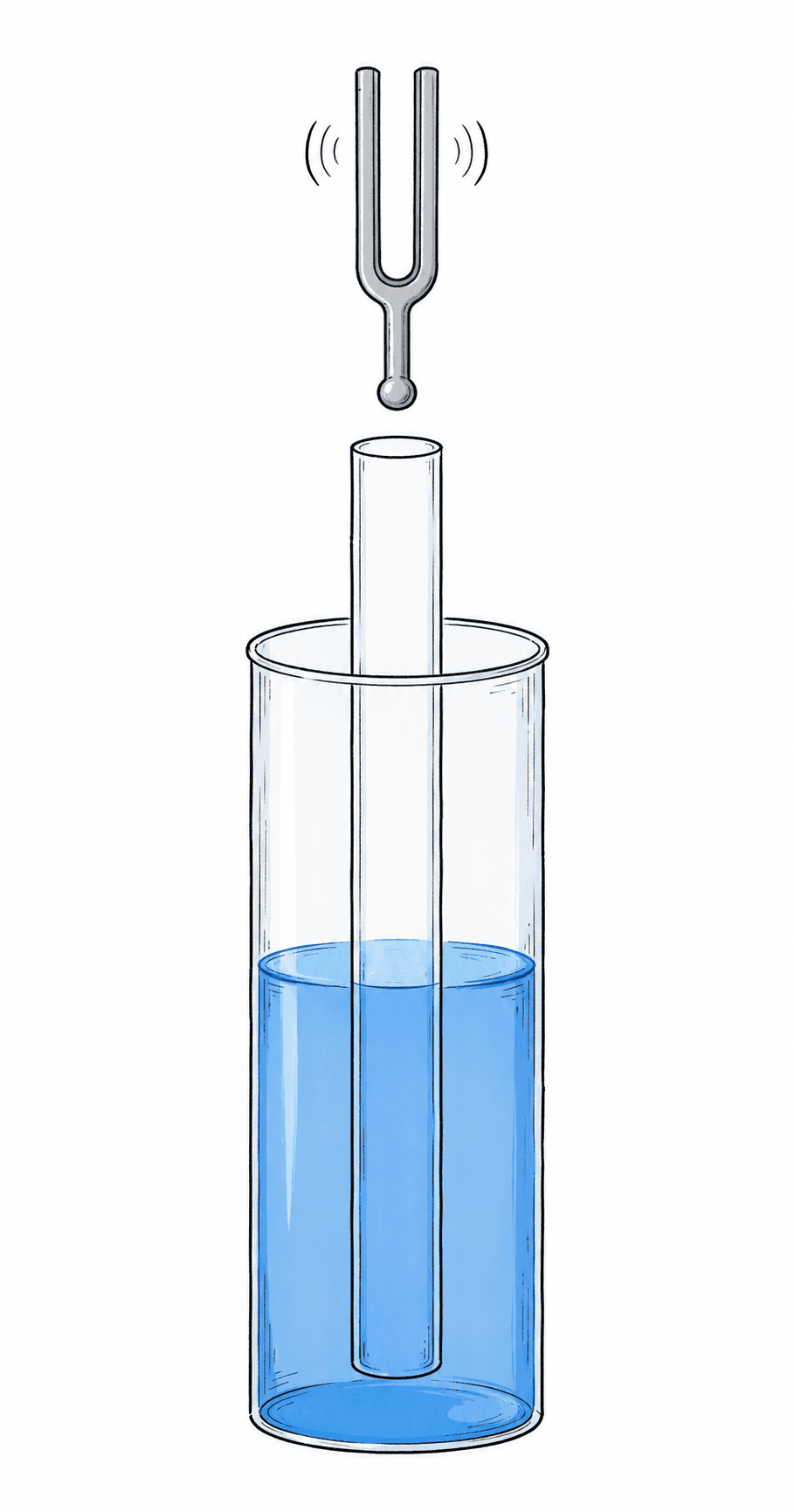
- Resonance tube. Hold a vibrating tuning fork over a tube standing in water. Raise or lower the water until the sound is loudest. That loudest point is . There the air column is , so that length.
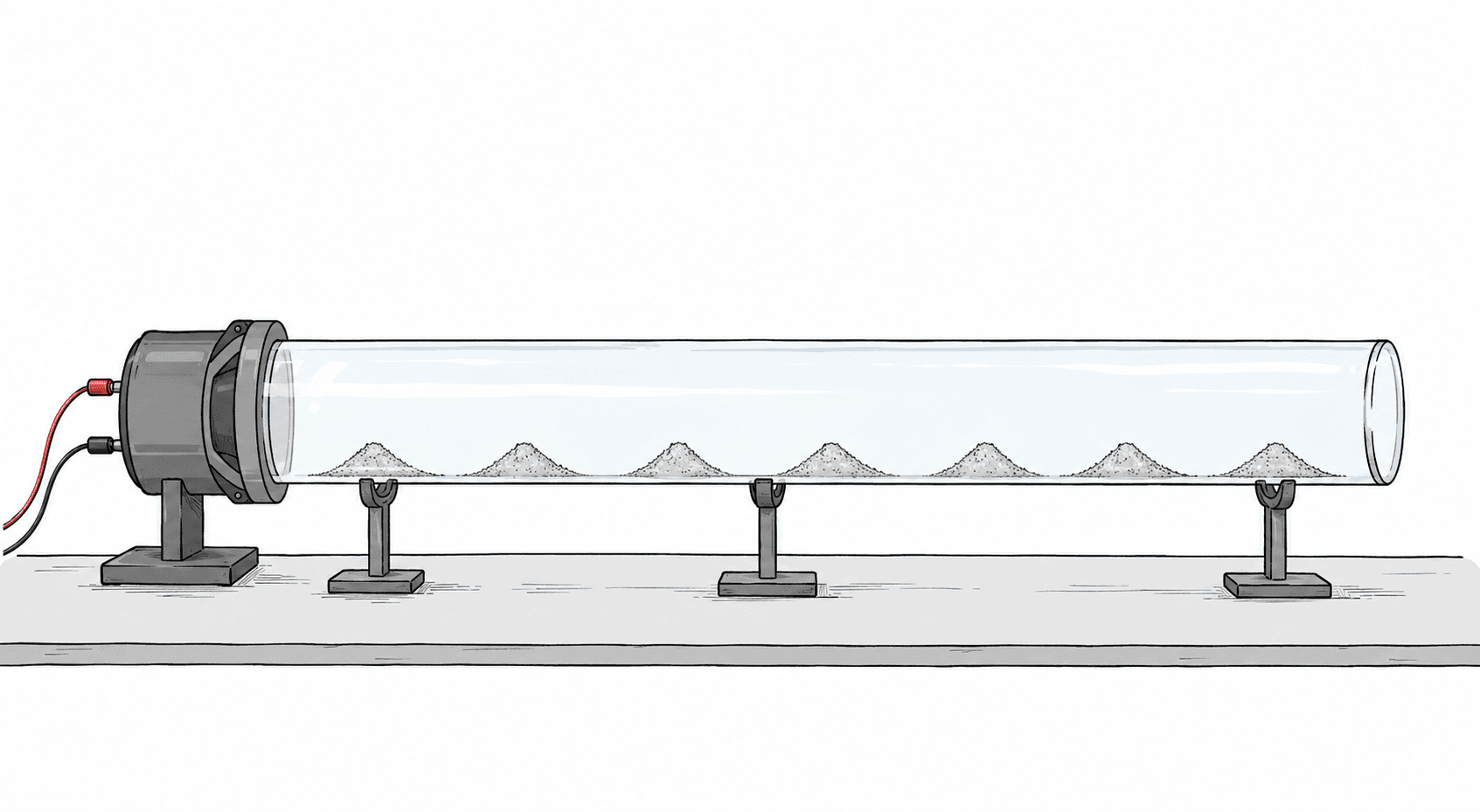
- Kundt's dust tube. Send sound down a tube with fine dust in it. At the antinodes the air moves the most, so the dust is shaken away. It gathers at the still nodes. Measure the pile spacing: that is .
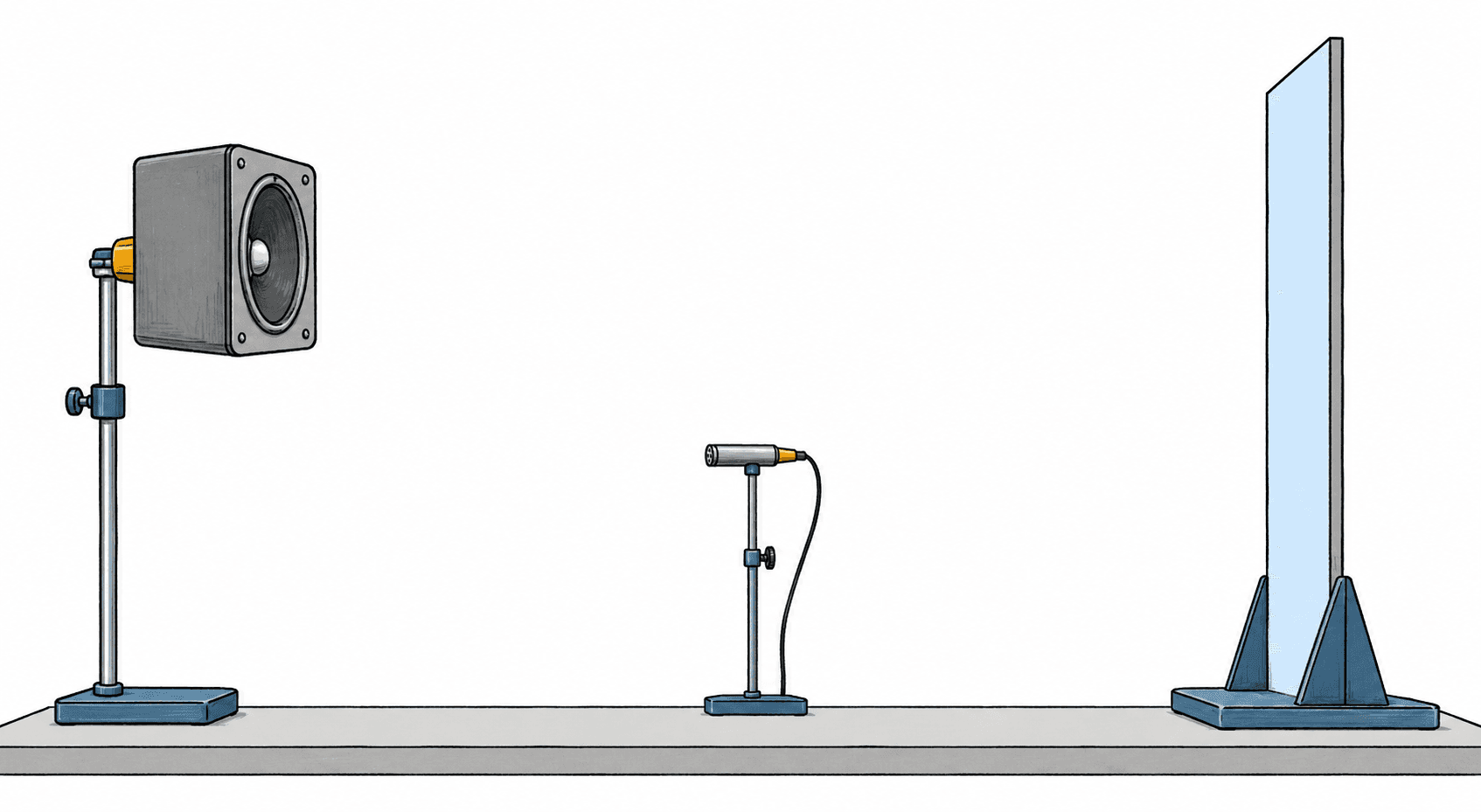
- Speaker and reflector. Point a speaker at a hard board. The reflection makes a stationary wave. Move a probe to find the nodes: they are apart. Microwaves work the same way: point the transmitter at a metal sheet and move the probe between them.
A worked resonance tube
Worked example
Speed of sound from a resonance tube
A 512 Hz tuning fork gives the first resonance when the air column is 0.16 m long. Find the speed of sound.
- First resonance: the air column is , so m.
- Then m/s.
Answer
Your turn— tap to reveal the worked answer (9702-style)
In a tube, dust piles are 0.34 m apart for a 500 Hz source. Find the speed of sound.
Answer: dust piles form at nodes, spaced , so m. Then m/s. (9702-style)
Every method does the same thing: use the stationary wave to get , then . Measure across several gaps for accuracy.